Building a Narrative-Led Ecosystem That Sells 10x Better
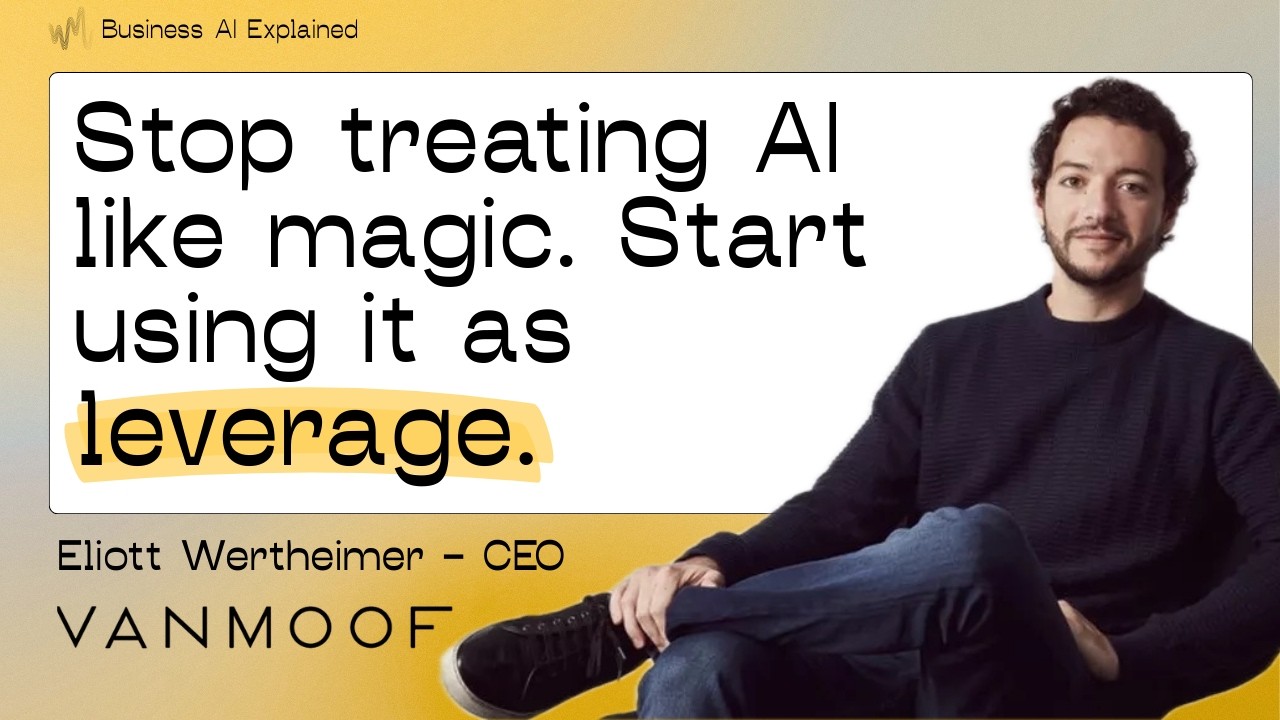
How does brand narrative connect product, marketing and operations?
A narrative only sells when the rest of the business backs it up.
Eliott Wertheimer frames it as a single connected motion: the story you tell is the same promise the ecosystem has to deliver on.
Narrative sets the promise.
Marketing builds the story and explains why the brand is credible.
The ecosystem proves it.
Product, branding and operations show that the brand really is what it claims to be.
Partners feel the lift.
When everything lines up, the brand can credibly tell partners it will help them 'sell 10 times better.' As Wertheimer puts it, "the product, the marketing, the branding, the operations, everything has to help each other."
What does 'over-delivering' look like for a hardware company like VanMoof?
For VanMoof, over-delivering means closing the gap between the narrative of authenticity and the operational reality of selling and servicing e-bikes.
Authenticity as the core promise.
After the bankruptcy, trust was the thing that broke down, so authenticity and transparency became the most important things VanMoof can do today.
Real people on real bikes — not AI-generated actors — make the brand feel reachable.
An ecosystem that backs the story.
Wertheimer describes building an ecosystem that then shows partners and customers, "actually, I am the way I'm telling you I am." Rebuilding the retail layer.
VanMoof was once the poster child of a D2C brand that didn't like retailers, and vice versa.
The company had to come back and admit it was wrong, because local bike dealers are essential to selling and servicing an e-bike, which is closer to a car than a normal bicycle in complexity and after-sales needs.
The lesson: a hardware brand's narrative is only as strong as the partner network and after-sales operation behind it.
“we can really help you sell 10 times better now. And we can give you access to something you've never had the opportunity to have before.”
Where does AI content fit inside a trust-led narrative?
AI content is useful, but it has to serve the trust story, not undermine it.
VanMoof is restarting on trust, so the bar for synthetic content is high — viewers can still tell when it's not a real bike or a real rider, and in VanMoof's current state that's not what the brand wants.
Storetasker's CMO makes a similar call on the creator side: on TikTok today, most D2C UGC posts that perform well are human-generated, and a real human talking about a product still outperforms AI UGC video.
That may shift, but the test is conversion, not novelty.
The pattern across both founders: keep humans in the loop where authenticity is the product, and use AI where it accelerates the workflow without breaking the promise.
“go to market for getting new brands is about building trust. It's a very small network in the world of ecommerce.”
How do you align team skill sets around an AI-enabled GTM motion?
David Arnoux, who advises GTM leaders on AI implementation, points to one team shape that has worked inside a 400-person European unicorn: One strong GTM strategist.
Usually the founder, head of growth or CMO — the person who owns the narrative and the motion.
Three AI-native builders for every strategist.
A 3:1 ratio of engineers to marketers, focused on observability of what's being released and maintenance so the workflows keep running.
Marketers who can build.
Arnoux notes the marketers can grow into automation experts themselves, because "it's not that complicated anymore" — he runs roughly 25 workflows simultaneously across ventures with a weak dev background, calling in a developer only when something breaks.
The takeaway: you don't need a huge team to ship AI-enabled GTM.
You need one owner of the story and a small group of builders keeping the pipes clean.
“the ratio of developers to marketeers is three to one. So you have three devs for sort of one marketeer.”
Why is trust still the engine of B2B and DTC growth?
Storetasker's CMO is blunt about it: "go to market for getting new brands is about building trust.
It's a very small network in the world of ecommerce." Because Storetasker has delivered a good product over time, much of today's revenue still comes from brands referring other brands.
Everything else — case studies, technical blog posts from in-house experts, a YouTube interview series — is described as accelerating that authority, not replacing it.
The narrative-led ecosystem works because each asset compounds the same trust signal.
Frequently asked questions.
- What is a narrative-led ecosystem?
- It's a go-to-market approach where the story a brand tells is reinforced by the product, marketing, branding and operations around it. Eliott Wertheimer describes it as everything connecting: the narrative claims the brand is good at something, and the surrounding ecosystem then proves it by over-delivering. The promise and the proof come from the same system, which is why partners and customers can be told the brand will help them sell 10 times better.
- Why did VanMoof rebuild its dealer network?
- VanMoof was originally the poster child of a D2C brand that rejected retailers, and retailers rejected VanMoof back. The company eventually accepted it was wrong, because an e-bike is closer in complexity to a car than to a normal bicycle and needs local touch points, support and after-sales. Local bike dealers are essential to delivering that around the product ecosystem, so VanMoof had to return to market and ask retail partners to work with the brand again.
- Should a trust-led brand use AI-generated content?
- VanMoof is restarting on trust, and authenticity and transparency are described as the most important things the brand can do today. AI video still risks viewers noticing it's not a real bike or a real rider, which in VanMoof's current state is not what the brand wants. Storetasker sees the same pattern on TikTok: most D2C UGC that performs well is human-generated, and a real human talking about a product still outperforms AI UGC video today.
- What team shape works for AI-enabled GTM?
- David Arnoux points to a 3:1 ratio of AI-native engineers to marketers, anchored by one strong GTM strategist who is usually the founder, head of growth or CMO. The builders focus on observability of what's being released and on maintenance so workflows keep running. Marketers can also build themselves into automation experts; Arnoux runs around 25 workflows simultaneously across ventures with a weak dev background, pulling in a developer only when something breaks.
- How does Storetasker turn narrative into pipeline?
- Storetasker's CMO frames go-to-market for new brands as fundamentally about building trust inside a small ecommerce network. Because the product has been good over time, much of today's revenue comes from brands referring other brands. Case studies, thoughtful technical blog posts from in-house experts and a YouTube interview series are positioned as ways to accelerate that authority, not to replace the underlying trust signal.
- What does 'over-delivering' mean in a GTM context?
- Wertheimer ties over-delivering directly to narrative. The brand tells partners and customers it is good at certain things, and then the ecosystem it has built shows them that the brand really is what it claims to be. The payoff is concrete: the brand can credibly offer partners the ability to sell 10 times better and give them access to something they've never had before, because the operations and product back the story up.