AI Upskilling for Companies: How to Drive Real Adoption
How do you get employees to adopt AI tools at work?
Adoption is a coaching problem before it is a tooling problem.
Elise Lasurel of CatalystAI describes her academy as "a coaching program for to upskill people on how to use AI tools in their companies" , focused on how to "strike a balance between encouraging people to take ownership and be creative at their job while also ensuring that there's the right governance and support from the execs" .
Two practical moves stand out: Recruit volunteers, not draftees.
Trainings are "good moments to identify AI champions" , and asking for volunteers works because "people are even more enthusiastic and able to give time when they are volunteers" .
Allocate time to stay current.
Abraham Gomez of Google notes that "a big part of today is you do have to adopt a mindset of some time has to be allocated and just staying up to date" , because products from just a few years ago already look outdated.
What does AI governance look like in practice?
Governance is not a policy PDF — it is an operating structure.
CatalystAI's Elise Lasurel breaks it into three layers: Rules aligned to strategy and data. "You have to give rules to be in line with your historical strategy and the way you manage data in your company." An AI transformation lead.
One person "who will have the leadership on AI" .
AI champions per function. "Thanks to those AI champions you will be able to capitalize on local initiatives." The intent is a "clear vision, clear rules, but giving the opportunity from all functions to give their output and to bring some new ideas, new opportunities, new business case on AI." Abraham Gomez frames the same idea through engineering language: "you build a harness for the LLM... but I think what sometimes happens too is you don't build a harness for your company." Surround teams with the right resources, then monitor the outputs.
How do you balance creativity and governance in AI rollouts?
The balance comes from being tool-agnostic and process-respectful.
CatalystAI deliberately refuses to standardize on one stack: "we really want to remain agnostic, meaning we don't want to push one for these or these tools, we really adapt ourselves to the best tools for the function." When working inside an existing company, the approach is additive rather than disruptive: "the idea is not to change everything... the idea is to see how we can infuse AI within the existing processes, within the existing stack of tools." This matters because, as VanMoof CEO Eliott Wertheimer points out, "the main limiter to us adopting AI to the full extent we could is literally legacy systems" — large organizations cannot rip-and-replace, so governance has to leave room for infusion.
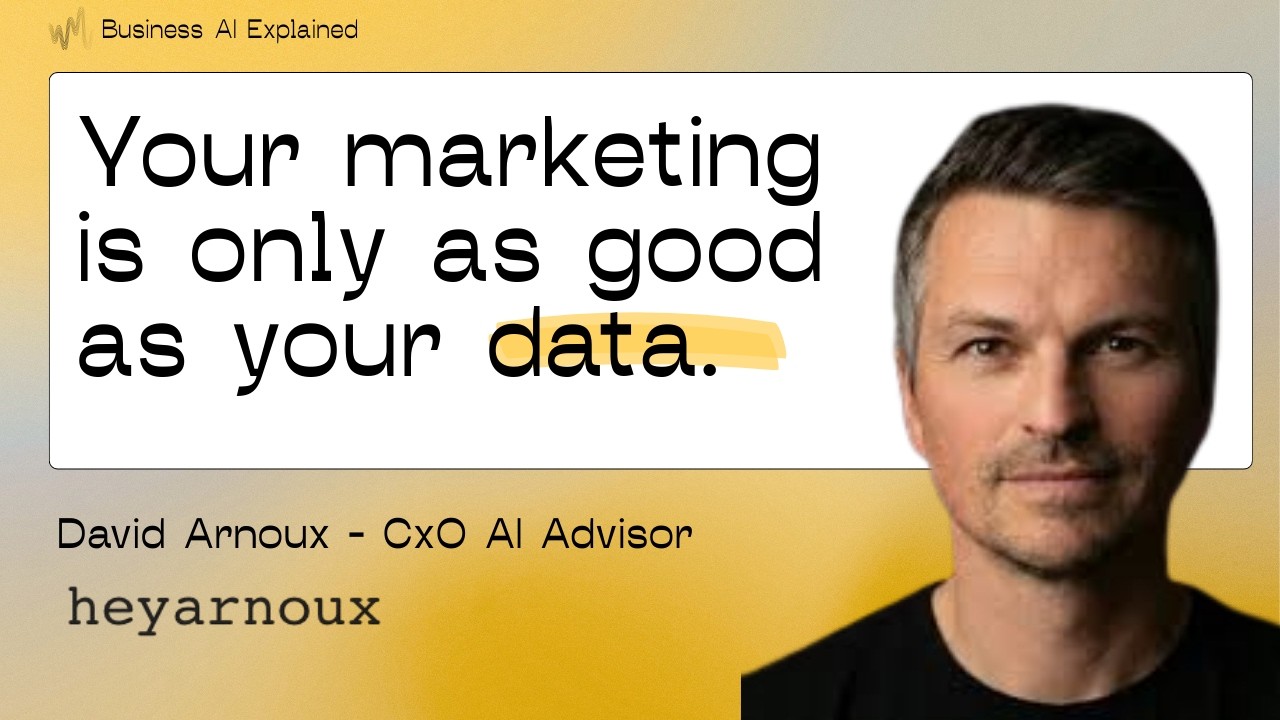
David Arnoux offers a complementary build-vs-buy-vs-hire heuristic: buy when "you have a proven workflow, the team isn't technical, and the speed matters" ; build when it is a "core differentiator" ; hire "one AI architect, fractional or full time, not 10 prompt engineers" for long-term work.
“One AI architect, fractional or full time, not 10 prompt engineers.”
What resources should leaders unlock for teams to actually play with AI?
Abraham Gomez argues the cultural prerequisite is explicit time and resourcing: "some time has to be allocated and just staying up to date and understanding what's happening in your domain." Without that, teams default to building things that "in a few years sort of becomes irrelevant." He pushes leaders to build internal muscle and tight feedback loops so teams can "iterate, take a step back, steer in a different direction" the moment a build is not delivering KPI uplift.
The discipline mirrors what strong vibe coders do — "they'll spend so much more time on planning than actually vibe coding" — clarifying purpose, evaluation, and good samples before attacking the problem.
At Lemlist, this has reshaped product roles entirely: "all the PMs have a dev setup... the same as if we were developers in the tech team" , with PMs spending most of their day in coding agents and using a "chat with codebase" pattern to understand legacy systems before shipping.
Frequently asked questions.
- Who should own AI transformation inside a company?
- Appoint a single AI transformation lead with clear authority, then surround them with AI champions in each function. As Elise Lasurel puts it, you need someone "who will have the leadership on AI," and champions per function so you can "capitalize on local initiatives." The combination gives executives a clear vision and clear rules while letting every function surface new business cases.
- How do you pick AI champions?
- Use trainings as discovery moments and ask for volunteers rather than assigning the role. Elise Lasurel notes that trainings are "good moments to identify AI champions," and that asking for volunteers works because "people are even more enthusiastic and able to give time when they are volunteers." Their role is to surface use cases from their function and feed them back into the governance structure.
- Should companies standardize on one AI tool stack?
- CatalystAI deliberately stays tool-agnostic: "we don't want to push one for these or these tools, we really adapt ourselves to the best tools for the function." Tools evolve quickly, and most companies already have a stack with working processes, so the right approach is to infuse AI into the existing stack and only recommend new tools when they are clearly relevant to the sector and job.
- When should a company build vs. buy vs. hire for AI?
- David Arnoux uses a simple framework: buy when "you have a proven workflow, the team isn't technical, and the speed matters" — think enrichment tools, deck generators, or HubSpot AI features. Build when it is a core differentiator with proprietary data and feedback loops. Hire for long-term strategic work: "one AI architect, fractional or full time, not 10 prompt engineers," covering data unification, repo architecture, and oversight.
- Why is AI adoption harder in larger, established companies?
- Legacy systems are the binding constraint. VanMoof CEO Eliott Wertheimer is blunt: "the main limiter to us adopting AI to the full extent we could is literally legacy systems." With many active production systems running all day, it is hard to fully leverage code-generation and module-replacement capabilities without human integration work — so governance must focus on incremental infusion rather than wholesale replacement.
- How much time should employees spend learning AI?
- Enough that staying current is part of the job, not an extracurricular. Abraham Gomez argues "some time has to be allocated and just staying up to date and understanding what's happening in your domain," because tools from just a few years ago already look outdated. Pair that with tight internal feedback loops so teams can iterate fast when a build is not producing KPI uplift.