Last week, in AI.
Eight observations from one week in the industry.
Last week we saw some key hires at major labs, and a few experiments on how teams get structured once AI can run back-office tasks and token cost stops being a constraint. The shape that emerges is one we have heard before: more output with fewer people, and a path toward more energy-efficient AI.
- 01A research lab is becoming the prime acquisition target in open source.
- 02Anthropic is stacking credibility ahead of its IPO.
- 03The number that unlocks the IPO.
- 04Tokens are the new venture currency.
- 05What a company actually looks like now.
- 06What happens when token cost is zero?
- 07The new AI ceiling has a price tag.
- 08The brute-force era of AI is running out of room.
A research lab is becoming the prime acquisition target in open source.
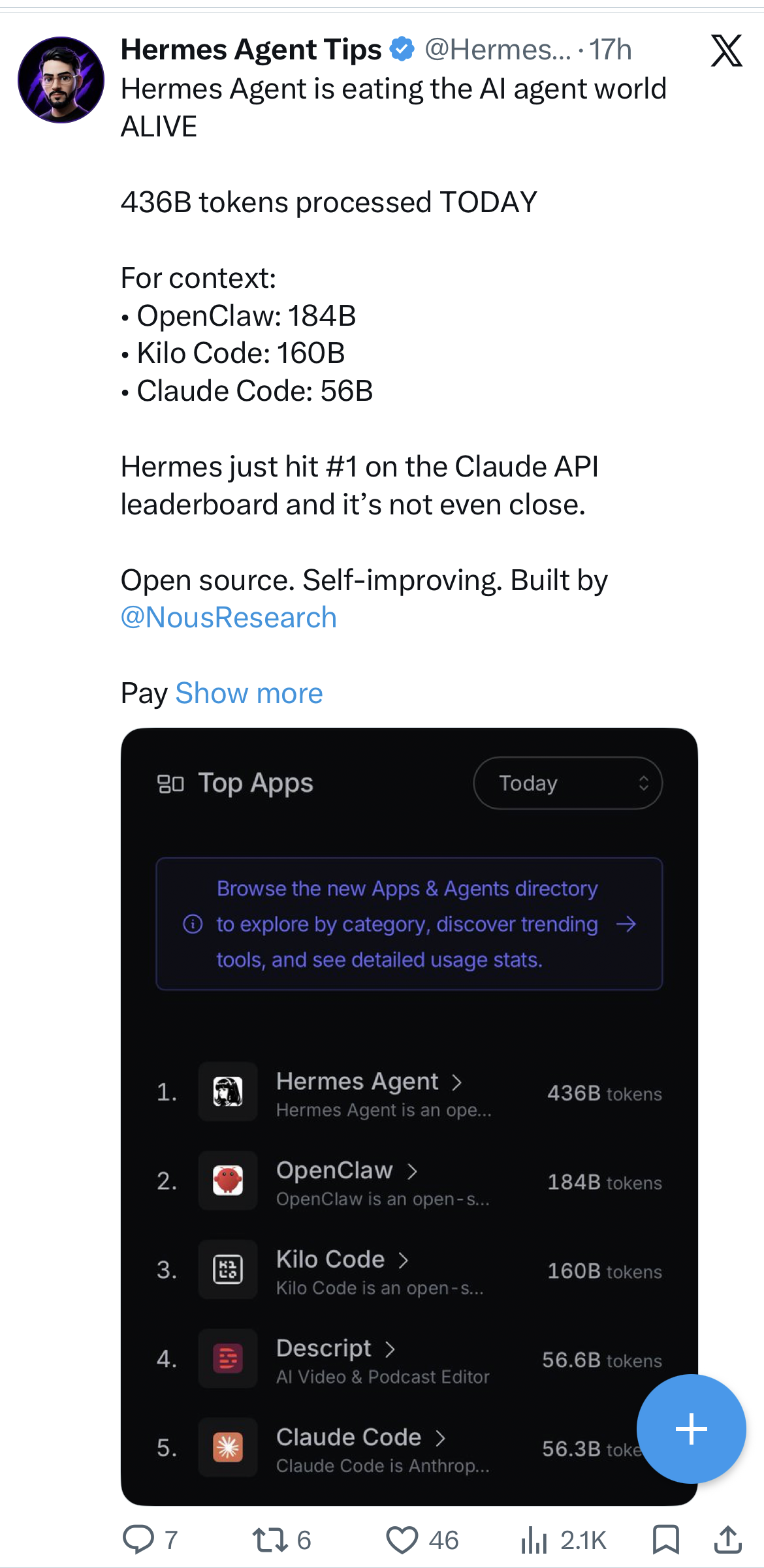
Token usage is the clearest signal of adoption for an AI agent. Nous Research's Hermes is now processing more than twice the daily volume of OpenClaw and other projects, and the same small research lab recently released a frontier LLM that performs almost as well as Anthropic's best models. OpenClaw, a solo-developer project, was absorbed by OpenAI earlier this year for a hefty sum.
AI companies are fighting for distribution. Any tool that gets adopted by engineers becomes a prime target. The risk is further consolidation. Losing an alternative this credible, a lab that ships both frontier LLMs and the most-used agent in open source, would push the ecosystem onto non-Western options like China's DeepSeek.
Anthropic is stacking credibility ahead of its IPO.
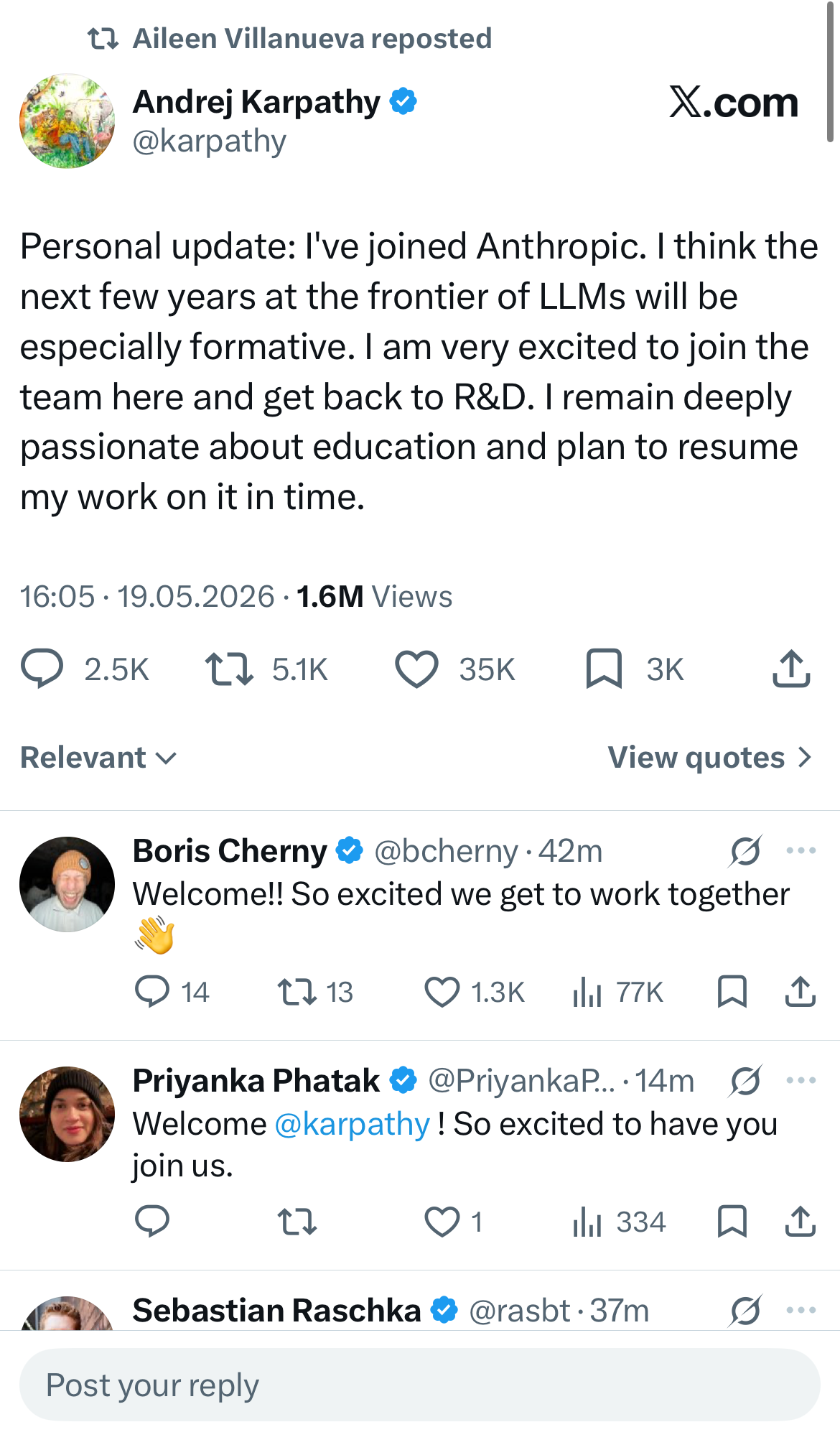
Andrej Karpathy joined Anthropic this week as a member of technical staff. He is an OpenAI founding member, former head of Tesla's computer vision team, and one of the most influential voices among AI developers. He follows Mike Krieger, the former CPO of Instagram, who joined the Anthropic team earlier this year. Both are choosing to build instead of manage.
Founders and senior leaders are going back to building, thanks to what AI now lets them do alone. Weeks before its IPO, Anthropic just hired one of the most respected engineers in the industry. The hire brings credibility and likability to the company, both of which matter the moment it lists on public markets.
The number that unlocks the IPO.
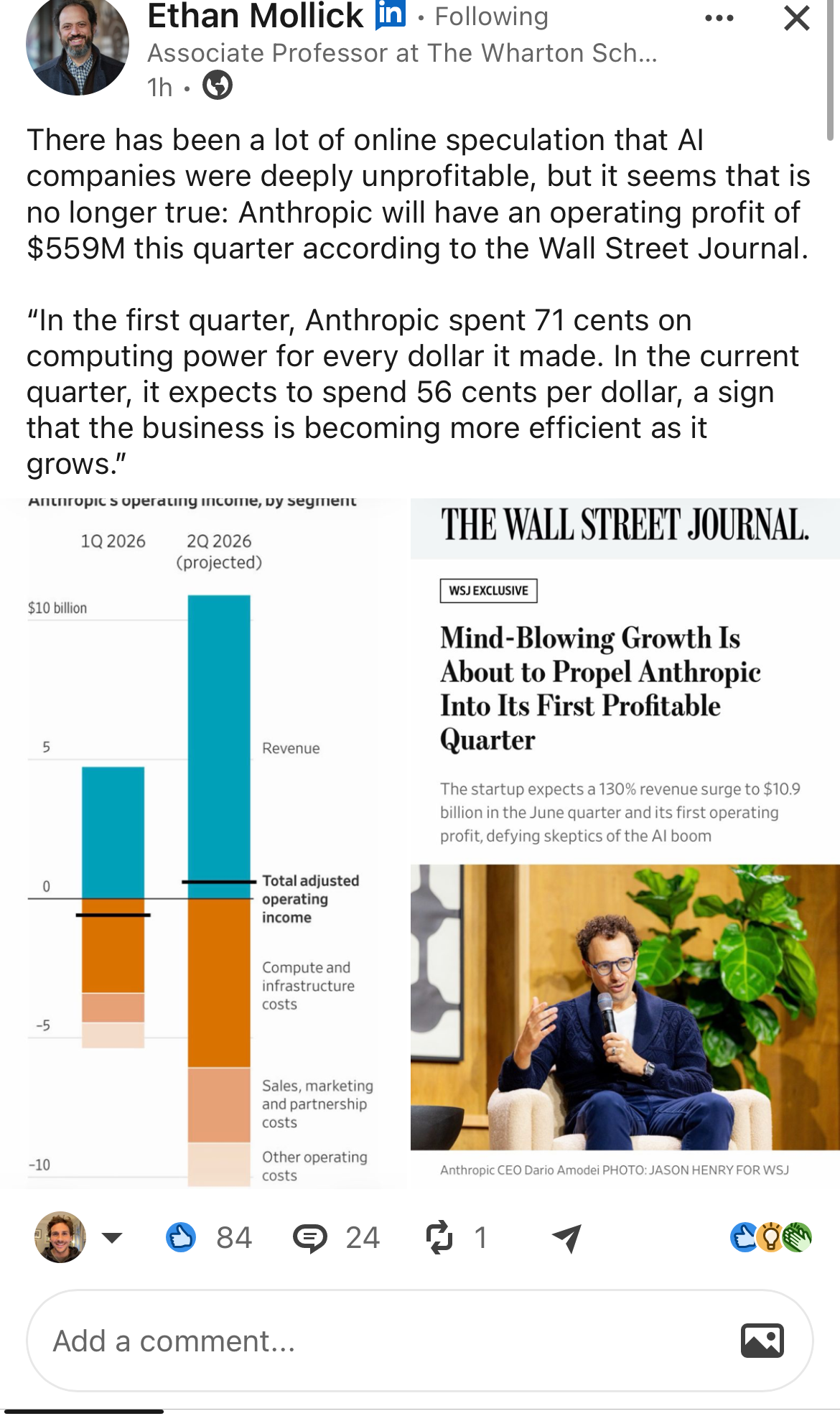
Anthropic is set to close Q2 with its first ever operating profit: $559 million. A quarter earlier, the company was losing 71 cents on every dollar of compute. It is now earning 56 cents on that same dollar.
S&P 500 inclusion requires positive earnings in the most recent quarter, and across the last four combined. Q2 starts that clock. At a trillion-dollar valuation, Anthropic would become the first LLM company in the index, changing how Wall Street treats the entire category.
Tokens are the new venture currency.
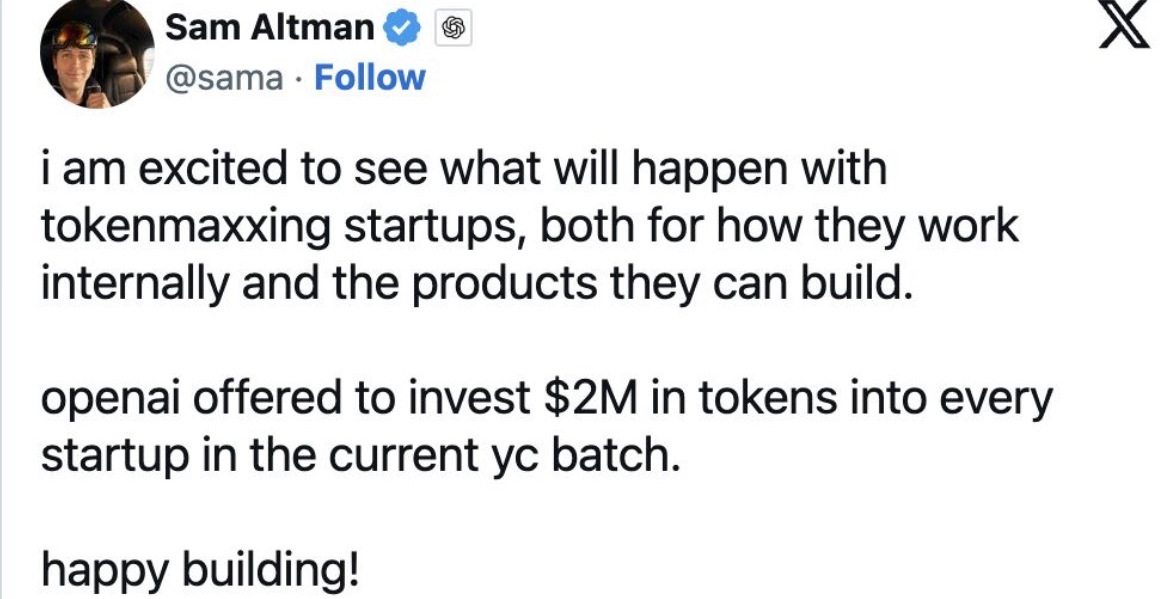
Sam Altman offered every founder in Y Combinator's current batch $2 million in OpenAI credits in exchange for equity at Series A. The pitch lands because the constraint has changed. Small AI-native teams need very little capital to hire engineers; they are bottlenecked on compute.
Pay founders in the one resource they actually need and you own the next generation of AI companies. Whoever controls the tokens controls the cap table.
What a company actually looks like now.
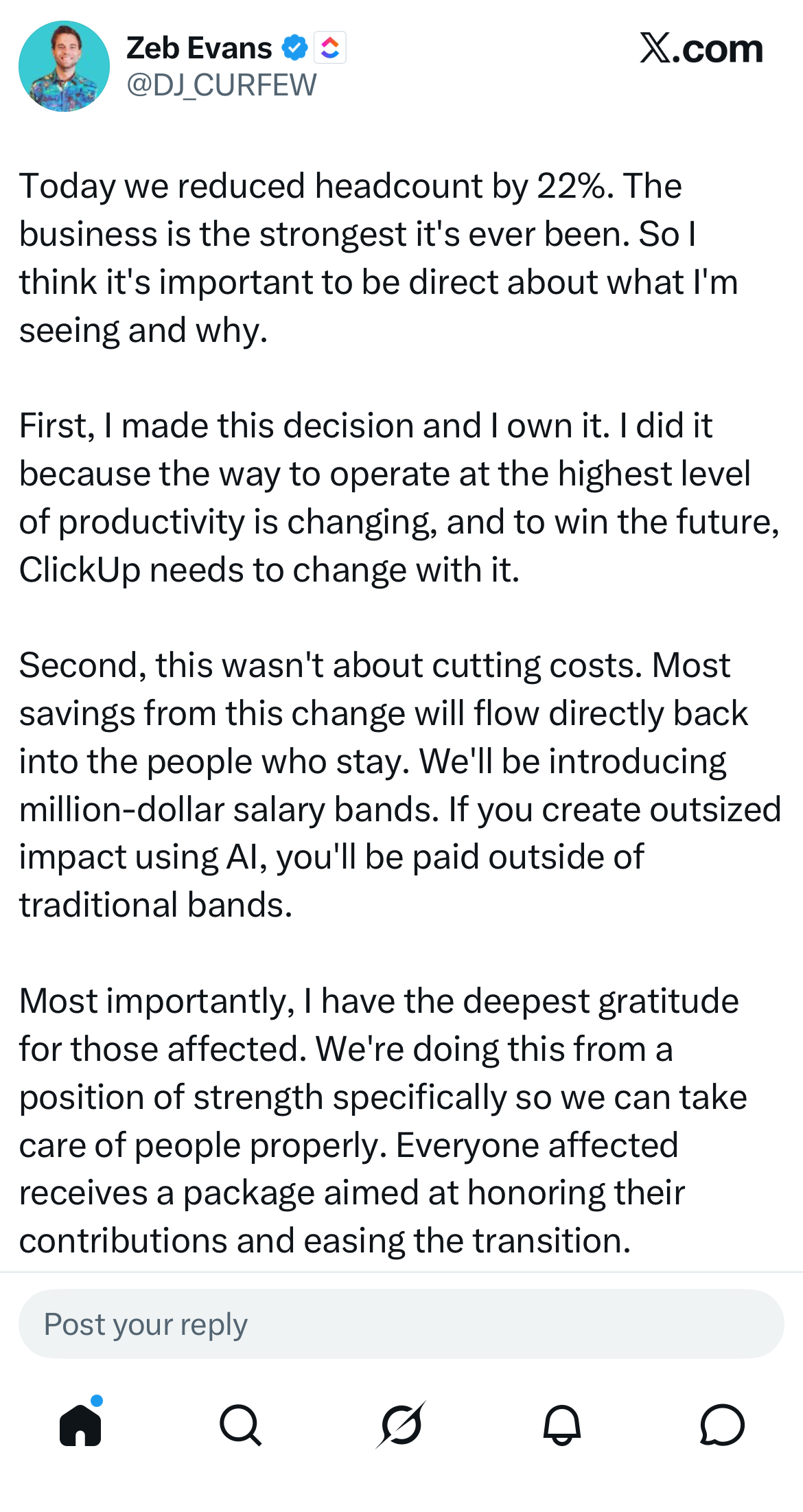
ClickUp's founder, Zeb Evans, cut 22% of staff and opened salary bands up to $1 million for the people who stayed. The company now runs roughly 3,000 internal AI agents, three for every remaining human. Evans's split for the people who stayed: those who build with agents, and those who face customers. Everything between those two roles goes away.
Every role inside the company is now either customer-facing or building. The coordination and administration that used to sit in the middle gets done by the agents. Every company will end up running this playbook, even when they hate the framing.
What happens when token cost is zero?
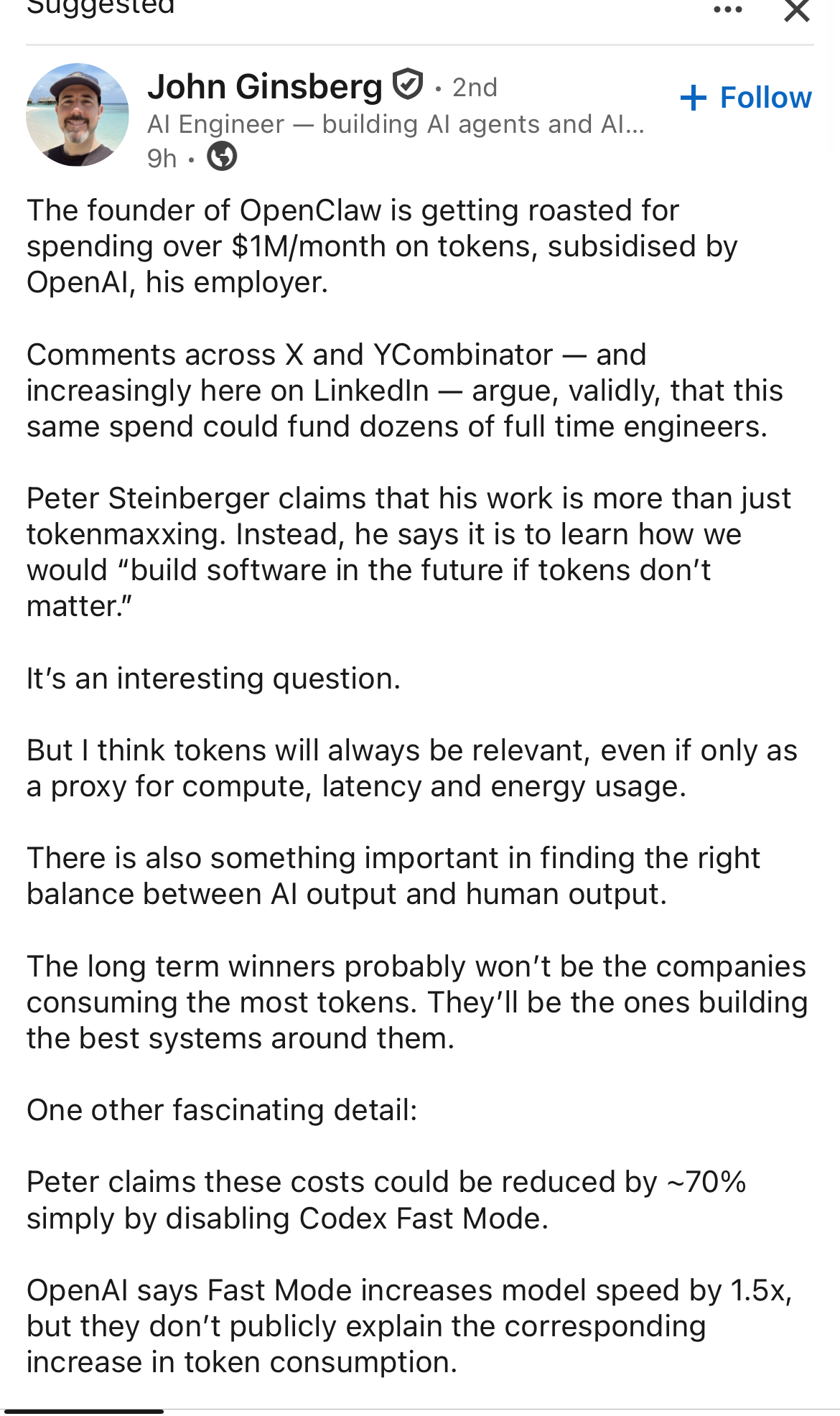
Peter Steinberger, the founder of OpenClaw and now an OpenAI employee, posted his last 30 days of API usage: $1.3 million, 603 billion tokens, 7.6 million requests. The work was done by 100 coding agents directed by a 3-person team. OpenAI pays the bill.
Most people read the bill as waste. Steinberger calls it research, an open experiment on what software development looks like when compute is no longer rationed. The answer may be the most important variable in how product teams get structured next.
The new AI ceiling has a price tag.
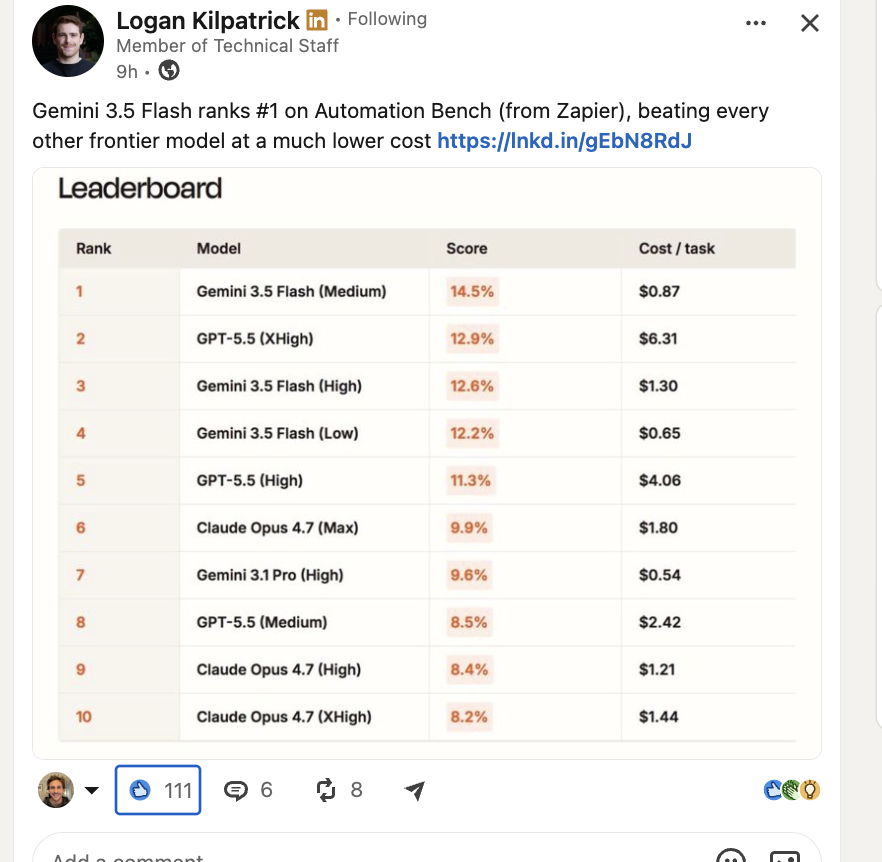
On a real-world test of agents completing structured tasks, Gemini 3.5 Flash finishes the average task for 87 cents. GPT-5.5 finishes the same task for $6.31. The spread is 7x on identical work.
Models are getting smarter and running longer, which means every extra minute on a task costs money. Cost per task is becoming the decisive question for any AI use case. Once price decides, the hyperscaler that owns the chips, the cloud and the model pulls ahead, which is Google.
The brute-force era of AI is running out of room.
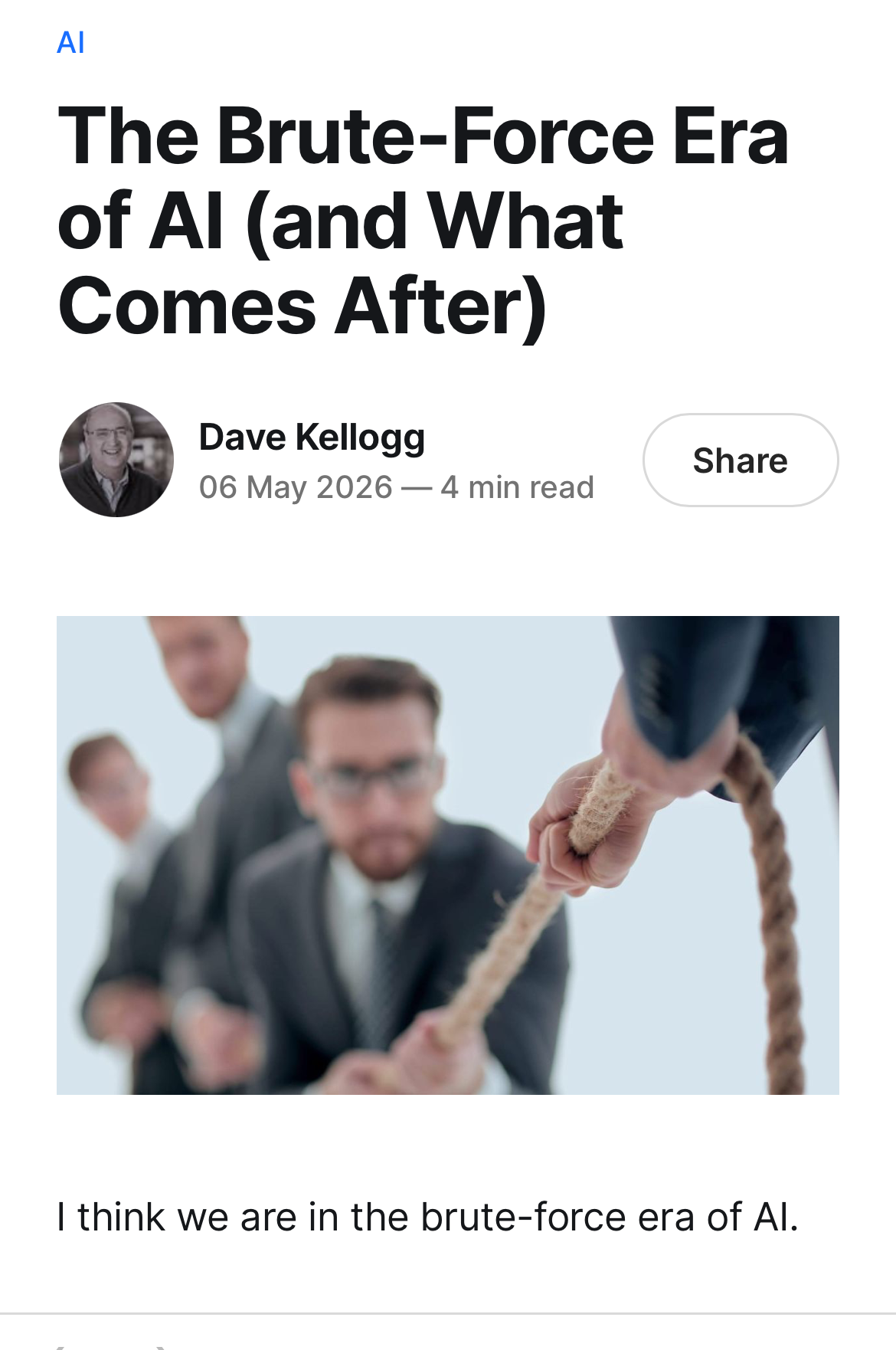
Dave Kellogg, an eminent venture capitalist, argues that frontier labs are scaling existing architectures instead of discovering new ones. "We are getting more, not different." The counter-pattern is DeepSeek V4, a trillion-parameter mixture-of-experts model where most of the weights stay dormant on any given query. It produces the same quality of output with far less compute.
The entire infrastructure narrative (Stargate, SoftBank, the data-centre arms race) assumes one thing: compute is the bottleneck. Alternative architectures like DeepSeek's challenge that assumption. If smaller models can do the same work, AI runs locally instead of on rented hyperscale infrastructure. The whole shape of the stack changes.