Vibe Coding for PMs: Prototyping AI Features Without a Dev Team
What is vibe coding and how does it work?
Vibe coding is the practice of building software by chatting with an AI agent rather than writing code line-by-line.
It became viable because two things shifted at once: model intelligence reached a usable threshold, and the harnesses around those models — systems like Claude Code — turned them into something genuinely useful.
As one practitioner put it, the great vibe coders spend far more time on planning than on actual vibe coding.
They consolidate what they want to build, the purpose, how they will evaluate it, and good samples they can borrow.
That upfront structure constrains what the LLM produces.
The feedback loop is also unusually clean compared to other AI use cases: either the app breaks or it works and looks like you wanted it to.
That clarity is what makes prototyping such a strong way to build intuition for working with AI — a point closely related to why the harness around the model matters more than the model itself .
“cloud code, part of it uh if you look at it is is the the model, obviously. But the the biggest part is the is the the harness and the system around uh around the models that are really making it extremely useful.”
How can a PM prototype an AI feature without engineering?
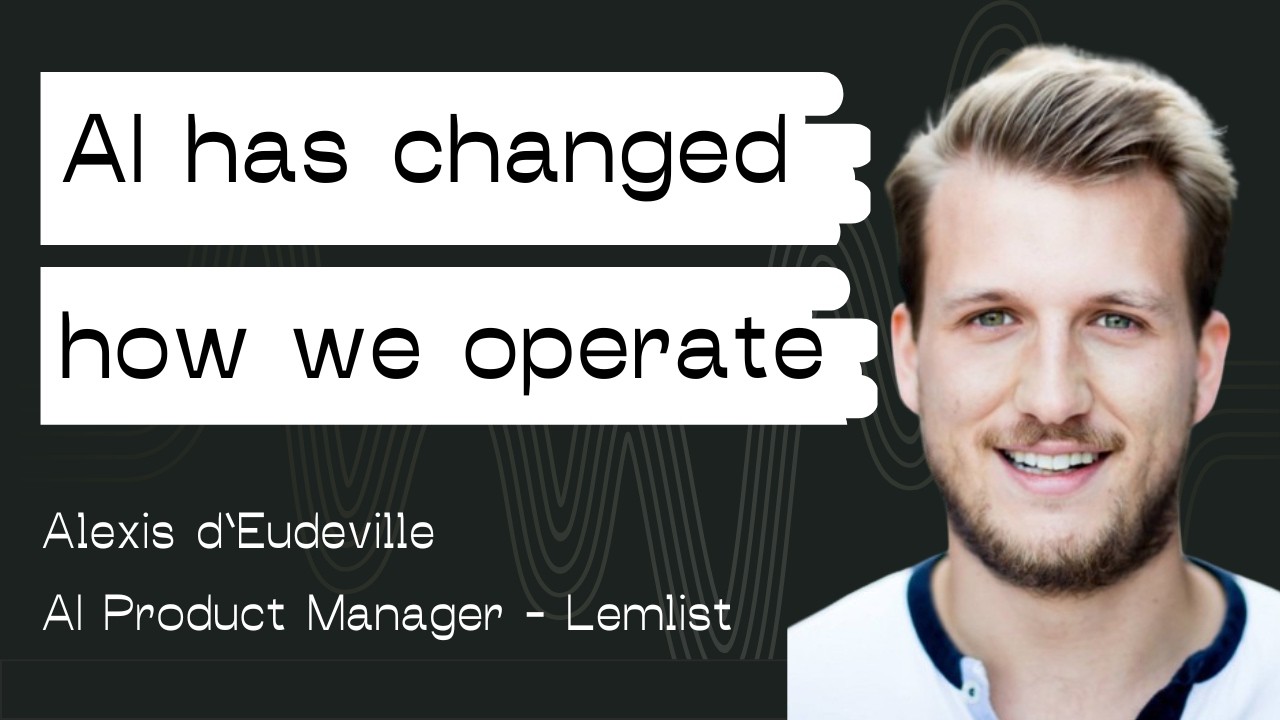
At Lemlist, the PM role has profoundly changed in two to three months.
PMs moved from a traditional flow — discovery, specification, design, QA, handoffs — to spending most of the day on Claude Code, chatting with the agent across several use cases.
The most accessible entry point is what one Lemlist PM calls "chat with codebase" .
Every PM has a dev setup identical to the engineering team and access to the entire codebase, so they can ask questions directly and understand how ten years of software and legacy have compounded.
Beyond the codebase, AI is used to: Process recorded user conversations and pass transcripts into Claude Code to surface feature ideas grounded in real customer pain.
Fetch competitor product pages on a regular basis to monitor what is shipping and where the market is moving.
This reshapes the classic PM lens of reach, impact, and complexity — because complexity, the historical blocker, drops once a PM can interrogate the codebase directly.
“A lot of the great vibe coders that I know is they'll spend so much more time on planning than actually vibe coding.”
Which AI tools are best for PM-led prototyping in 2026?
Two categories of tools come up.
The first is agentic coding environments — Claude Code being the canonical example, where most of the value sits in the harness around the model, not just the model itself.
The second is no-code and vibe-coding builders such as Lovable and Base44 , which teach operators that AI requires properly structured prompts to produce a proper output.
There is a real onboarding cost.
It takes roughly two weeks to dive into Claude Code, play with it, and push past the feeling of being overwhelmed — the CLI alone can be intimidating for non-technical people.
Once past that mental barrier, integration with almost anything becomes possible.
For codebases with significant legacy, the work does not stop at install.
Lemlist now has a developer working almost full-time on the Claude Code setup — the file system of skills, rules, and subagents — to keep the agent efficient inside their specific technical environment.
“now at LEMList, all the the PMs have a dev setup, um exactly the same as if we were uh developers in the in the tech team.”
How do you actually drive adoption of vibe coding inside a team?
Having a license is not the same as benefiting from the tool.
The advice is to surround the team with the right resources and the right information so the LLM — and the people using it — do not go off on a tangent, then monitor whether the work is building traction or producing useful feedback from the product itself.
For non-technical operators, vibe-coding tools like Lovable and Base44 are a training ground: they make it visible that you need to structure prompts, check the output, and enhance your instructions until it reaches a level you are comfortable with.
That muscle then transfers — the intuition built by prototyping in code, where success or failure is binary, can be reapplied to fuzzier domains like marketing and sales where output quality is more subtle.
“with coding, it's very clear whether the output is good or not. Yeah, either the app breaks or it works and it looks like you want it to look.”
Frequently asked questions.
- What is vibe coding in plain terms?
- Vibe coding is building software by chatting with an AI agent like Claude Code rather than writing every line yourself. It works because models have reached a usable level of intelligence and the harness around them — the system that orchestrates the model — has matured. The discipline that separates good vibe coders from bad ones is planning: defining what you want to build, its purpose, how you will evaluate it, and the samples you can borrow before you start prompting.
- How has the PM role changed because of vibe coding?
- At Lemlist, the PM role has profoundly changed in the past two to three months. PMs have moved away from the traditional flow of discovery, specification, design, and QA handoffs. Instead, most of their day is spent on Claude Code, chatting with the agent across several use cases. Every PM at Lemlist has a dev setup identical to the engineering team and full access to the codebase, so they can ask questions directly and understand how years of legacy software have compounded.
- What is the first vibe-coding use case a PM should try?
- The most accessible starting point is "chat with codebase." A PM with a dev setup and access to the repository can simply ask the agent questions to deeply understand how the existing software works and how years of legacy decisions have compounded. It does not require shipping anything new — it builds the foundation of understanding that all later prototyping depends on.
- Which tools should a non-technical PM start with?
- Claude Code is the reference for agentic coding, though it takes roughly two weeks to push past the initial overwhelm of the CLI. For operators who want a softer on-ramp, vibe-coding builders like Lovable and Base44 are useful because they make the prompting discipline visible — you have to structure the prompt properly to get a proper output, then check and enhance your instructions until the result is good enough for daily use.
- How long does it take to become productive with Claude Code?
- Expect about two weeks to dive in, play with it, and feel a bit overwhelmed by how powerful it is — especially for non-technical people, since a CLI can be intimidating. Once past that mental barrier, you can integrate with almost anything. For products with significant legacy code, there is an additional learning curve in understanding how the agent behaves inside that specific codebase, which is why some companies dedicate a developer to maintaining the Claude Code setup, skills, rules, and subagents.
- Why does prototyping build AI intuition that transfers to other domains?
- With coding, the feedback is binary: either the app breaks or it works and looks the way you wanted. That clarity is missing in marketing and sales, where evaluating an AI output is more subtle. By learning to prototype, an operator builds the muscle of structuring prompts, reading outputs, and improving instructions — and that intuition can then be reapplied to fuzzier domains where success is harder to judge.