Chat With Your Codebase: How PMs Use Claude Code to Replace Specs
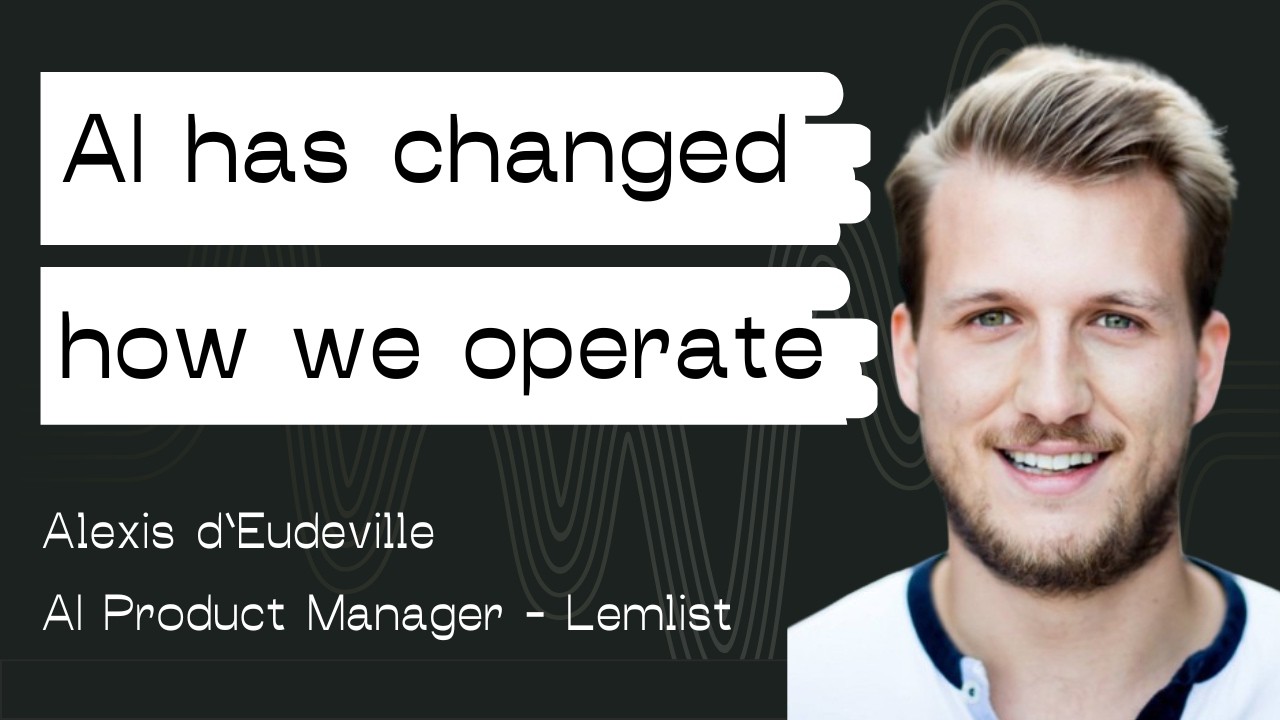
How do product managers use Claude Code day-to-day?
The traditional PM flow — discovery, specification, design, QA — has been compressed into conversations with an agent.
At Lemlist, the shift happened in roughly two to three months.
Most of the day on Claude Code , chatting with the agent on several use cases instead of writing specs.
Chat with codebase , described as the most life-changing and most accessible use case for any PM.
Competitor monitoring : using Claude Code to fetch competitor product pages regularly and track new feature releases.
Customer insight processing : passing recorded user conversation transcripts into Claude Code to surface pains and feature ideas.
The change is not purely about model quality.
As one guest put it, Claude Code is partly the model but "the biggest part is the harness and the system around the models that are really making it extremely useful."
What does 'chat with codebase' mean for a PM?
Chat with codebase means a PM opens Claude Code against the full repository and asks questions in natural language to understand how the product actually works under the hood — including the legacy that has compounded over years of building.
At Lemlist, this is paired with organizational access: PMs can review the codebase through the GitHub MCP and even push code into production.
As one host summarized, "unless you have those capabilities in place in the company, it would be impossible to move at the speed of Lemlist." It is not just a tooling question.
Leadership had to create the conditions for teams to work this way, and that required sponsorship from the top because it challenges existing habits and processes.
“now at LEMList, all the the PMs have a dev setup, um exactly the same as if we were uh developers in the in the tech team”
Do PMs need a dev environment setup to use AI effectively?
At Lemlist, yes.
All PMs have a dev setup "exactly the same as if we were developers in the tech team" and access to the entire codebase.
Getting value out of Claude Code is not instant.
Expect a learning curve: Roughly two weeks to get past the initial overwhelm of how powerful Claude Code is, especially for non-technical users intimidated by a CLI.
Codebase-specific tuning : on a legacy codebase, there is additional learning in how the agent behaves inside that specific environment.
Dedicated harness work : Lemlist now has a developer working almost full-time on the Claude Code setup — skills, rules, subagents — to make it efficient in their technical environment.
The integration surface matters too.
Teams connect Claude Code via MCP to GitHub, Linear, Notion, and Intercom so the agent can pull tickets, check diffs from the last release, and push collateral through APIs.
“the biggest part is the is the the harness and the system around uh around the models that are really making it extremely useful”
Why is this an organizational change, not a tooling change?
The Lemlist guest is explicit: "at the end of the day, it's not really a tool question and a tooling problem.
It's much more of a people and organization questions." Leadership decided to create the conditions for teams to adopt Claude Code, which required sponsorship because it changes how people work.
Devs previously had Cursor and used it mostly for simple code completions.
When tech management gave Claude Code licenses to all devs, the team observed a shift in product behavior.
PMs were given the same dev setup as engineers and access to the entire codebase, which is what unlocks the chat-with-codebase workflow in the first place.
“at the end of the day, it's it's not really a tool question and a tooling problem. It's much more of a people and organization uh questions”
Frequently asked questions.
- What is 'chat with codebase' for a product manager?
- It's a workflow where a PM uses Claude Code against the company's entire repository and asks questions in natural language to understand how the product is built, including legacy that has compounded over years. The Lemlist guest calls it the use case that has changed his life the most and the most basic and accessible one for any PM.
- How long does it take a PM to get productive with Claude Code?
- Expect roughly two weeks to push past the initial overwhelm. Claude Code is powerful but not immediately accessible to non-technical users, especially because of the CLI. On a legacy codebase there is additional learning in how the agent behaves inside that specific environment, which is why Lemlist now has a developer working almost full-time on its Claude Code setup.
- Do PMs need the same dev environment as engineers?
- At Lemlist, yes — all PMs have a dev setup exactly the same as developers in the tech team and access to the entire codebase. They also have access to the GitHub MCP to review the code and the ability to push code into production. Without those organizational capabilities in place, it would be impossible to move at the same speed.
- What tools beyond Claude Code matter for this workflow?
- Teams connect Claude Code to other systems via MCP. One example: GitHub MCP for the codebase, Linear for tickets so the agent can check diffs from the last release, Notion for review, and Intercom for help center, marketing emails, and customer communication — with Claude pushing directly to Intercom via their API once content is approved.
- Is adopting Claude Code mainly a tooling decision?
- The Lemlist guest is explicit that it is much more of a people and organization question than a tooling problem. Leadership had to create the conditions for teams to work this way and sponsor the change, because challenging existing habits and processes creates friction. Without top-level sponsorship, the shift is not really possible.
- How are PMs using AI beyond the codebase itself?
- They use Claude Code to process raw customer material — recorded user conversations are transcribed and passed in to surface pains and new feature ideas. They also use it to fetch competitor product pages on a regular basis, monitor what features competitors release, and get a feel for where the market is going so they can bring relevant ideas back to their users.